What Is Strength Training? Benefits, Examples & How to Start
What is strength training? Learn how resistance training works, its science-backed health benefits, how often you should train, and how beginners can get started.
By Coach John · October 19, 2026
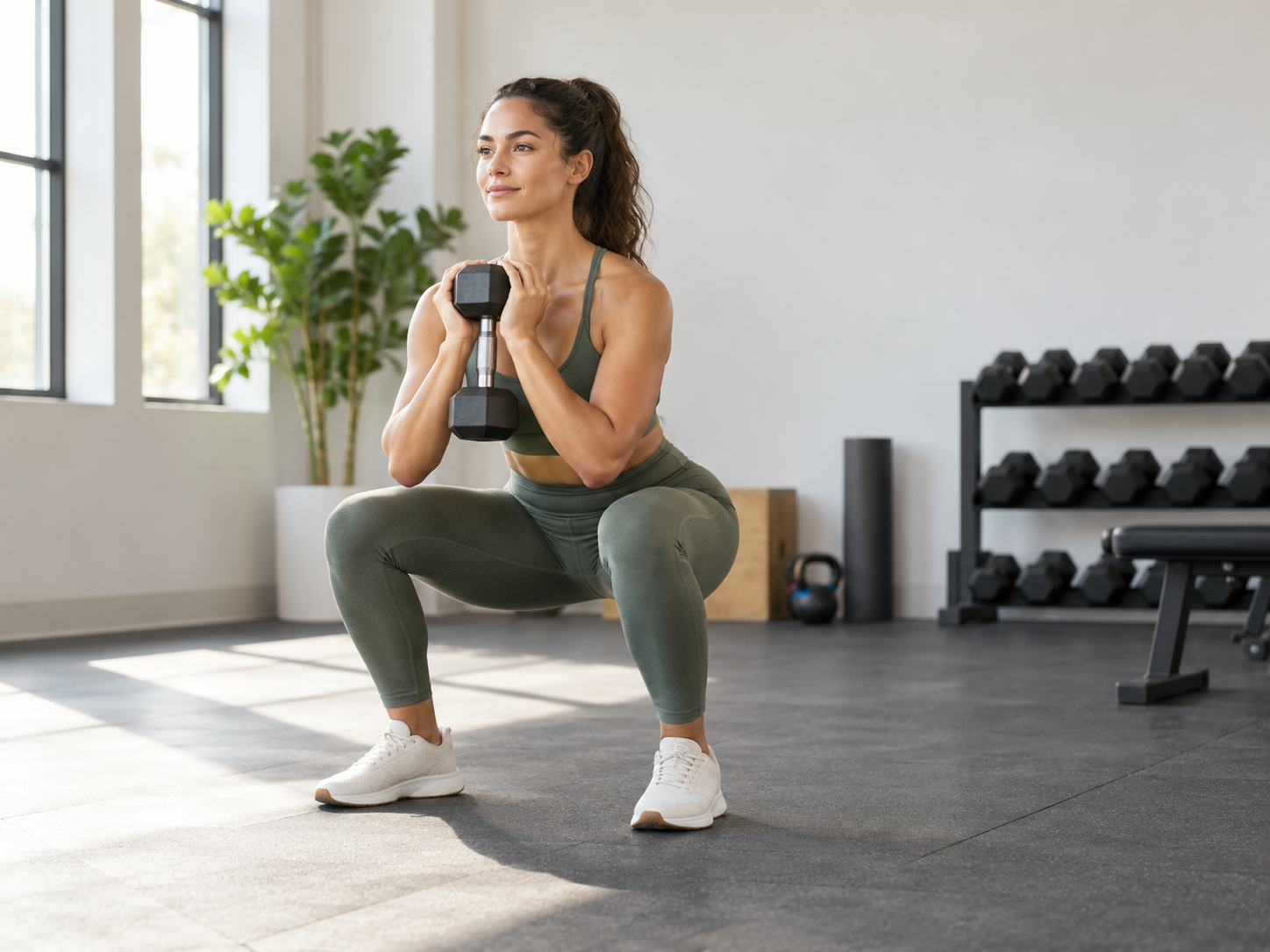
If you’ve been told you should lift weights but aren’t exactly sure what that means, you’re not alone. What is strength training, exactly?
Strength training is exercise that makes your muscles work against resistance. That resistance can come from dumbbells, barbells, weight machines, resistance bands, or even your own body weight. The goal is simple: challenge your muscles enough that your body adapts and becomes stronger. And while building muscle is one benefit, strength training does much more than change how you look.
What Is Strength Training?
Strength training, also called resistance training, involves repeatedly producing muscular force against some form of resistance.
Examples include:
Squats
Deadlifts
Push-ups
Rows
Lunges
Bench presses
Pull-ups
Exercises using resistance bands or machines
You don’t technically need weights. A push-up is strength training because your muscles have to produce enough force to move your body against gravity. Over time, the resistance needs to become challenging enough to keep stimulating adaptation. This is known as progressive resistance training.
The American College of Sports Medicine (ACSM) recommends progressive resistance training for improving muscle strength, muscle size, power, and physical function.
How Does Strength Training Make You Stronger?
When you start strength training, your body adapts in several ways.
Initially, a significant portion of your strength gains comes from your nervous system becoming better at using the muscle you already have. Your brain and muscles essentially become better at working together. With continued training, your muscle fibers can also grow larger—a process called muscle hypertrophy.
Research involving thousands of participants shows that many different strength-training programs can increase both strength and muscle mass compared with doing no resistance training. Heavier loads tend to produce greater improvements in maximal strength, while muscle growth can occur across a much wider range of resistance levels.
In other words, you don't have to train like a powerlifter to benefit from strength training.
What Are the Benefits of Strength Training?
The most obvious benefit is getting stronger. But that is only part of the picture.
Regular strength training can improve:
Muscular strength and muscle mass. Your muscles become capable of producing more force and can increase in size with adequate training.
Physical function. Being stronger can make everyday activities such as climbing stairs, carrying groceries, getting off the floor, and playing sports easier.
Health as you age. Maintaining strength and physical function becomes increasingly important as we get older. Resistance-training research consistently shows improvements in strength and functional capacity in older adults.
Strength training is also associated with better long-term health outcomes. A 2022 systematic review and meta-analysis found that people performing muscle-strengthening exercise had approximately a 10–17% lower risk of several major health outcomes, including all-cause mortality, cardiovascular disease, cancer, and diabetes, compared with people doing none. Because these were observational data, they show an association rather than proving that strength training alone caused the reduction in risk.
How Often Should You Strength Train?
You don't need to live in the gym.
The World Health Organization recommends that adults perform muscle-strengthening activities involving all major muscle groups at moderate or greater intensity at least two days per week. That makes two full-body workouts per week a reasonable starting point for many beginners.
A simple workout might include:
A squat or lunge
A hip-hinge exercise
A pushing exercise
A pulling exercise
An abdominal or trunk exercise
You could perform a few challenging sets of each exercise and gradually increase the resistance, repetitions, or difficulty as you become stronger.
There is no magical repetition range everyone must use. Research shows that many different resistance-training prescriptions work. The most important factor for a beginner is consistently challenging the muscles and gradually progressing over time.
Is Strength Training the Same as Weightlifting?
Not exactly.
Strength training is the broad category. Weight training is simply one way to perform it.
You can strength train using:
Free weights
Weight machines
Resistance bands
Your own body weight
You can also strength train for different goals. One person might want to improve their squat strength. Another might want larger muscles. Someone else may simply want to remain strong and independent as they age. The exercises and training program can be adjusted depending on the goal.
Strength Training vs. Cardio: Which Is Better?
Neither replaces the other.
Aerobic exercise primarily challenges your cardiovascular system, while strength training primarily challenges your muscles and neuromuscular system. For general health, you should ideally do both.
The World Health Organization recommends 150–300 minutes of moderate aerobic activity per week—or 75–150 minutes of vigorous activity—in addition to muscle-strengthening exercise at least twice per week. You don't have to choose between being strong and having good cardiovascular fitness.
So, What Is Strength Training?
Strength training is any exercise in which your muscles repeatedly work against resistance with the goal of becoming stronger and more capable.
It can involve barbells, dumbbells, machines, bands, or your own body weight. Done consistently and progressively, it can increase strength, build muscle, improve physical function, and contribute to better long-term health. And you don't need an advanced program to get started.
For most people, two well-designed strength-training workouts per week is a very good place to begin.
Sources
American College of Sports Medicine. Resistance Training Prescription for Muscle Function, Hypertrophy, and Physical Performance in Healthy Adults: An Overview of Reviews. 2026.
Currier BS, et al. Resistance training prescription for muscle strength and hypertrophy in healthy adults: a systematic review and Bayesian network meta-analysis. British Journal of Sports Medicine. 2023;57:1211–1220.
World Health Organization. WHO Guidelines on Physical Activity and Sedentary Behaviour. 2020.
Momma H, et al. Muscle-strengthening activities are associated with lower risk and mortality in major non-communicable diseases: a systematic review and meta-analysis. British Journal of Sports Medicine. 2022;56:755–763.